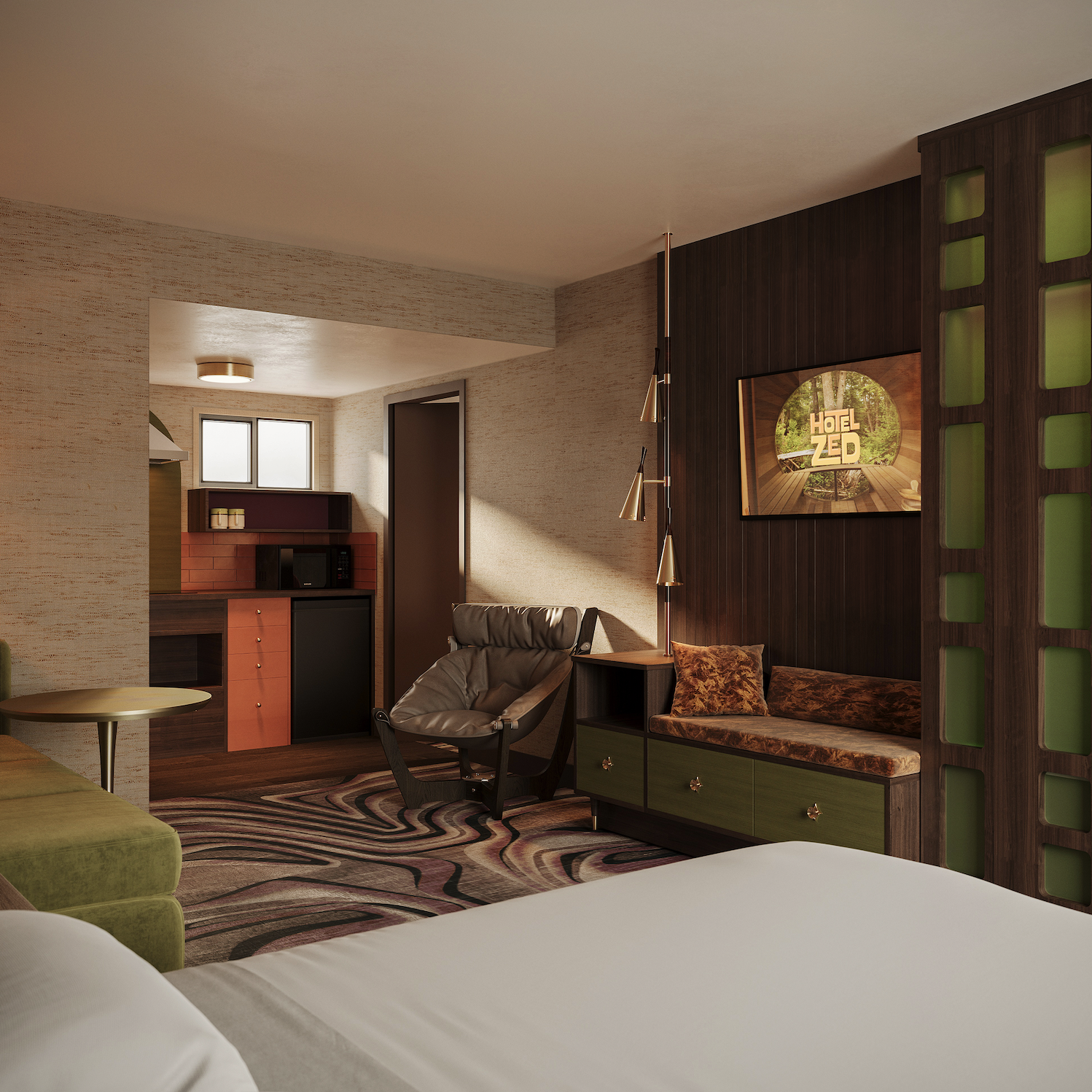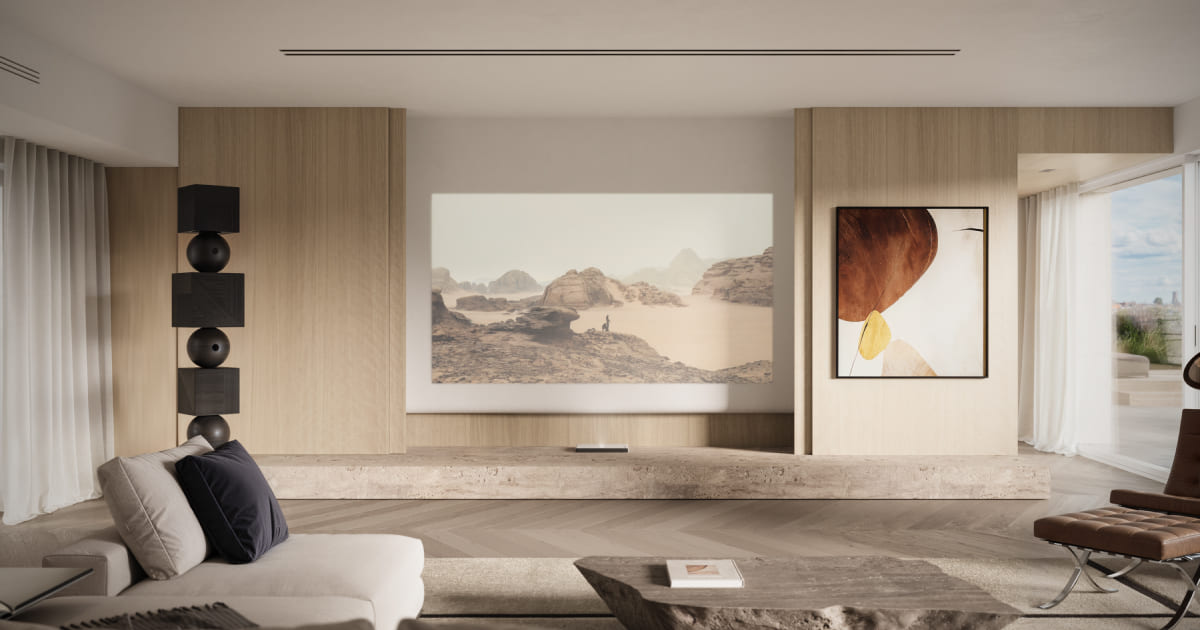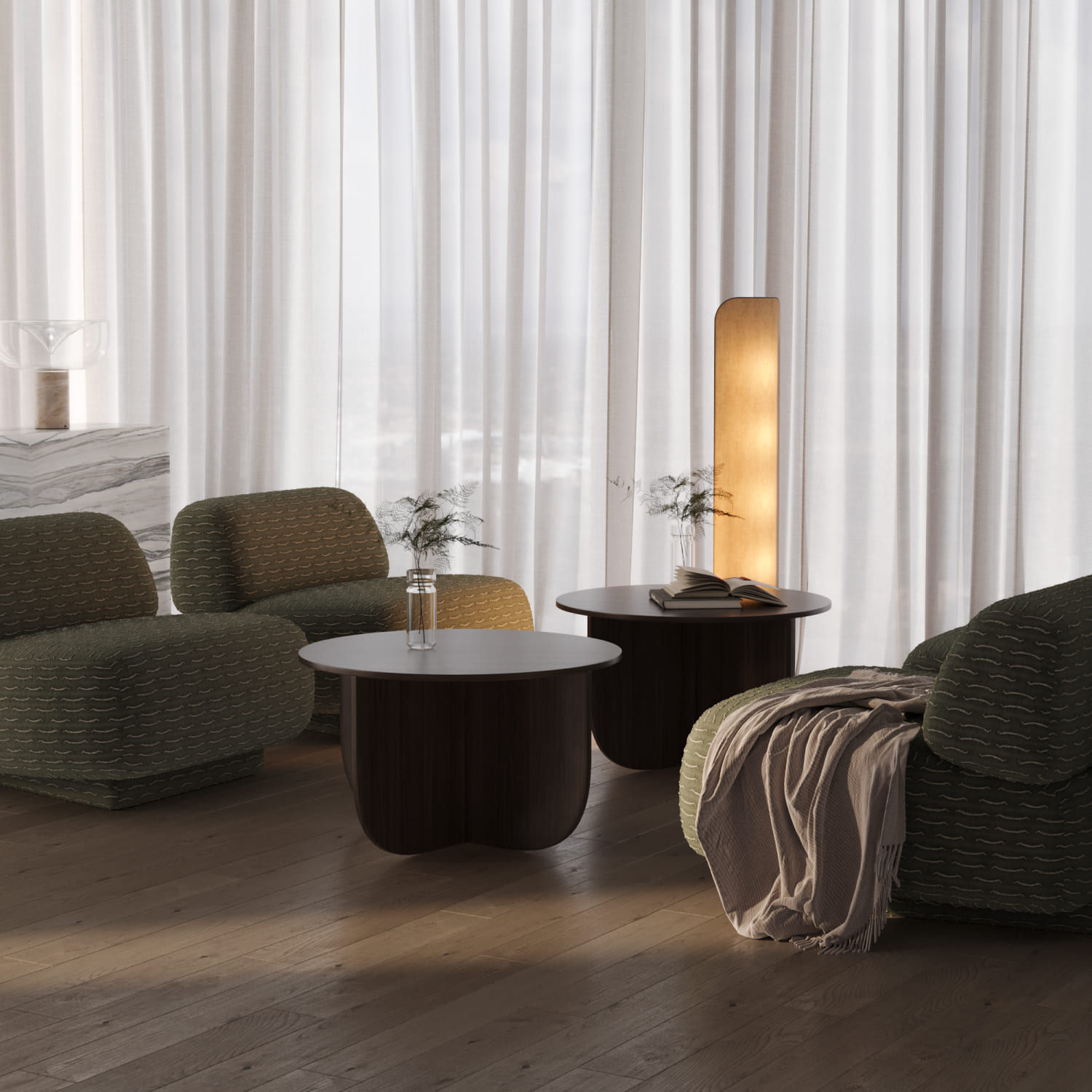

Hotel rendering is how a hospitality project becomes visible before it is built. Lobbies, suites, pool decks, and the quiet moments in between, composed with the same care as the architecture itself.
It is a design document, a brand review submittal, and a commercial asset. Often at the same time.
The timing also matters. The global hotel construction pipeline reached an all-time high of 15,922 projects and 2.44 million rooms at the end of Q4 2025, with the United States accounting for 6,146 projects and China 3,608 (Lodging Magazine, 2026).
Lodging Econometrics forecasts a further 2,617 new hotels (389,175 rooms) opening globally in 2026 and 2,630 hotels (384,955 rooms) in 2027 (Lodging Magazine, 2026). Every project in that pipeline will need imagery, at multiple stages, for audiences that include brand reviewers, city planners, investors, and future guests.
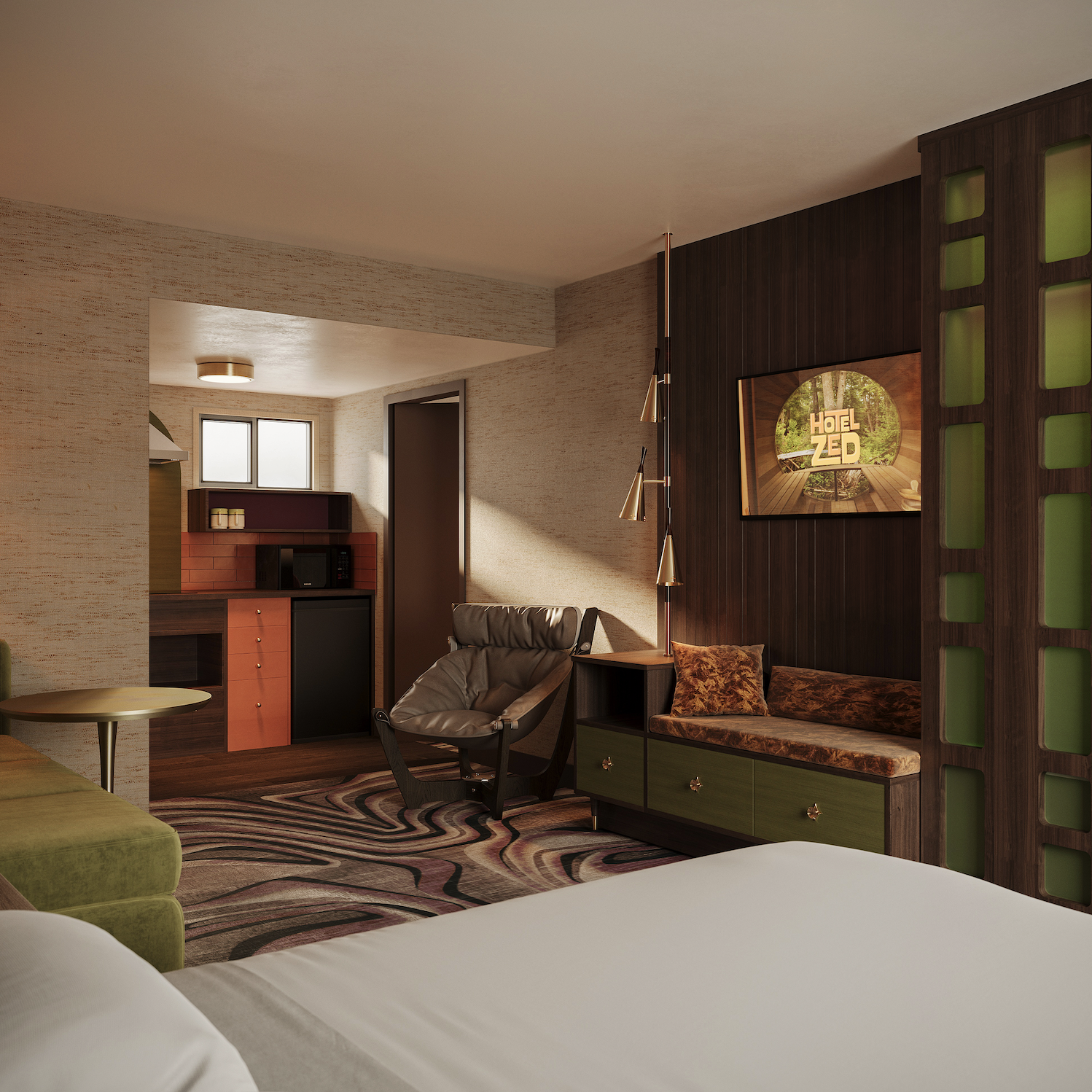
This guide walks through what hotel rendering is, when it earns its place across a hospitality project, how it moves through brand and flag operator review, how it works as a commercial tool, where AI does and does not fit, and how to choose a studio. It is written from inside the process at Eight Station, drawing on work we have done with Kenrick Hotel, Hotel Zed, and other hospitality projects.
What hotel rendering actually is
Hotel rendering sits in a specific place in the life of a hospitality project. Architectural drawings are precise, but they ask the viewer to imagine.
A render makes the imagination unnecessary. It is the moment the project becomes something a buyer, an investor, or a brand reviewer can respond to directly.
The work spans several formats. Exterior rendering shows a building in its street and its light (exterior rendering is a category of its own, with its own considerations around context, time of day, and landscape).
Interior rendering covers guest rooms, lobbies, restaurants, pool decks, amenity spaces, and back-of-house (interior rendering is where most hotel projects live). Animations and walkthroughs extend the same work into moving imagery, though still images remain the most widely used format across the hotel project lifecycle.
The audience is broader than most people assume at the start. Developers use renderings to align their own teams.
Marketing directors use them on websites, brochures, and OTA listings. Operators and brand reviewers use them to approve design. Planning authorities use them to evaluate context and scale.
A single set of renderings often has to work for all of these audiences across a project's timeline. Which means a render's usefulness is decided long before it is rendered.
It is decided by when in the project it is commissioned, and by what it is being asked to do.
When hotel rendering earns its place in a project
Hospitality projects have a longer runway than most commercial real estate. Hotel construction timelines typically range from 12 to 24 months depending on property size and service level (PropertyBuild, 2026).
Limited-service hotels of 80 to 120 rooms often complete in 12 to 16 months. Full-service properties require 18 to 24 months, and pre-construction design, permitting, and franchise approval add six to twelve months before groundbreaking (PropertyBuild, 2026).
Renderings are commissioned at several distinct points across that runway. The purpose of each set is different.
In feasibility and site selection, a rendering can help a developer decide whether a site is worth pursuing. These are typically looser, more intentional studies of what a place could become. They are not brand documents. They are decision tools.
In entitlement and design review, the rendering becomes part of a formal submission. Ground-up hotel development typically requires a design review process in which a committee evaluates proposed building design, landscaping, and exterior materials for compatibility with surrounding settings (Permit Advisors, 2018).
Planning commission meetings follow, involving presentations from staff planners and applicants regarding the proposed project (Permit Advisors, 2018). At this stage, a render has to be accurate to the architecture, to the site, and to the context around the site. It is being evaluated by people whose job is to find reasons to reject or modify the project.
Brand and flag operator review is its own process. It has its own expectations, deliverables, and timing. That is the next section.
Pre-construction marketing is where hospitality diverges sharply from other real estate categories. A residential development can open a sales office with a model unit.
A hotel cannot open bookings until it is stay-ready, unless it has imagery that lets it sell rooms before the rooms exist. This is one of the most specific commercial reasons hotel projects commission renderings early.
On the Kenrick Hotel, a Marriott property, and on other hospitality projects we have worked on, renderings made it possible to begin bookings and marketing before the rooms were physically ready. The imagery carried the property through its pre-opening window.
Live use after opening is the phase most underestimated in early planning. Renderings do not retire when construction finishes.
Professional photography of a finished hotel requires styling, lighting, weather alignment, and operational coordination that is harder and more expensive than people expect (rendering vs photography is a longer conversation of its own). The result is often a few strong photographs for a handful of featured spaces, with the rest of the property carried by the original renderings for months or years.
Brand review is one kind of pressure. The commercial pressure is another. Before the marketing use, though, comes a process most hotel owners only fully understand once they are inside it.
How hotel renderings move through brand and flag operator review
A render made for a flag operator is not a marketing image. It is a design review document.
It has to read as the hotel the brand has approved, rather than an idealized version of it.
Large hotel brands maintain detailed design standards that govern everything from guestroom dimensions to lobby programming to the finish of a reception desk. These standards are not suggestions.
They define what the brand is. And when a project passes through design review, renderings are part of the required submittal package.
Marriott's own Hotel Design Standards make this explicit. In the interior documents phase, alongside floor plans, reflected ceiling plans, and material samples, the standards call for perspectives required to define design intent, professionally created (Marriott Design Standards, 2020).
Renderings are not a marketing afterthought. They sit inside the formal review package.
The review runs through phases. Design phase reviews, including preliminary and design development, require a series of sequential meetings, document submissions, and approvals (Marriott Design Standards, 2020).
Each phase has its own submittal package, and renderings live inside those packages as evidence of design intent. A hotel rendering that passes preliminary review may still be revised at design development. A design that is fully resolved but uses unapproved FF&E will not pass, regardless of how the image looks.
Brand-approved FF&E is part of what makes hotel rendering different from residential or retail work. Marriott maintains extensive approved vendor lists for furniture, fixtures, equipment, and contractors, and working within this approved network is often mandatory for brand compliance (King Construction, 2025).
A lamp can be rendered well, but if it is not from an approved supplier, the render is representing a design reality the built hotel will not deliver. This is why briefing a rendering studio for a flagged project requires handing over brand standards and approved FF&E, not only drawings.
The timing on brand review is also tighter than most people expect. Marriott requires model guestrooms to be completed at least 12 months prior to the hotel's scheduled opening, so that design corrections can be incorporated before interior walls, plumbing, HVAC, and electrical rough-ins are installed (Marriott Design Standards, 2020).
The renderings that inform those model guestroom decisions are produced earlier still. Brand review, in other words, happens on imagery long before it happens on built space.
For a flagged project, precision matters more than drama. The rendering is being read as a design document first, and as a considered image second.
Hotel rendering as a commercial tool
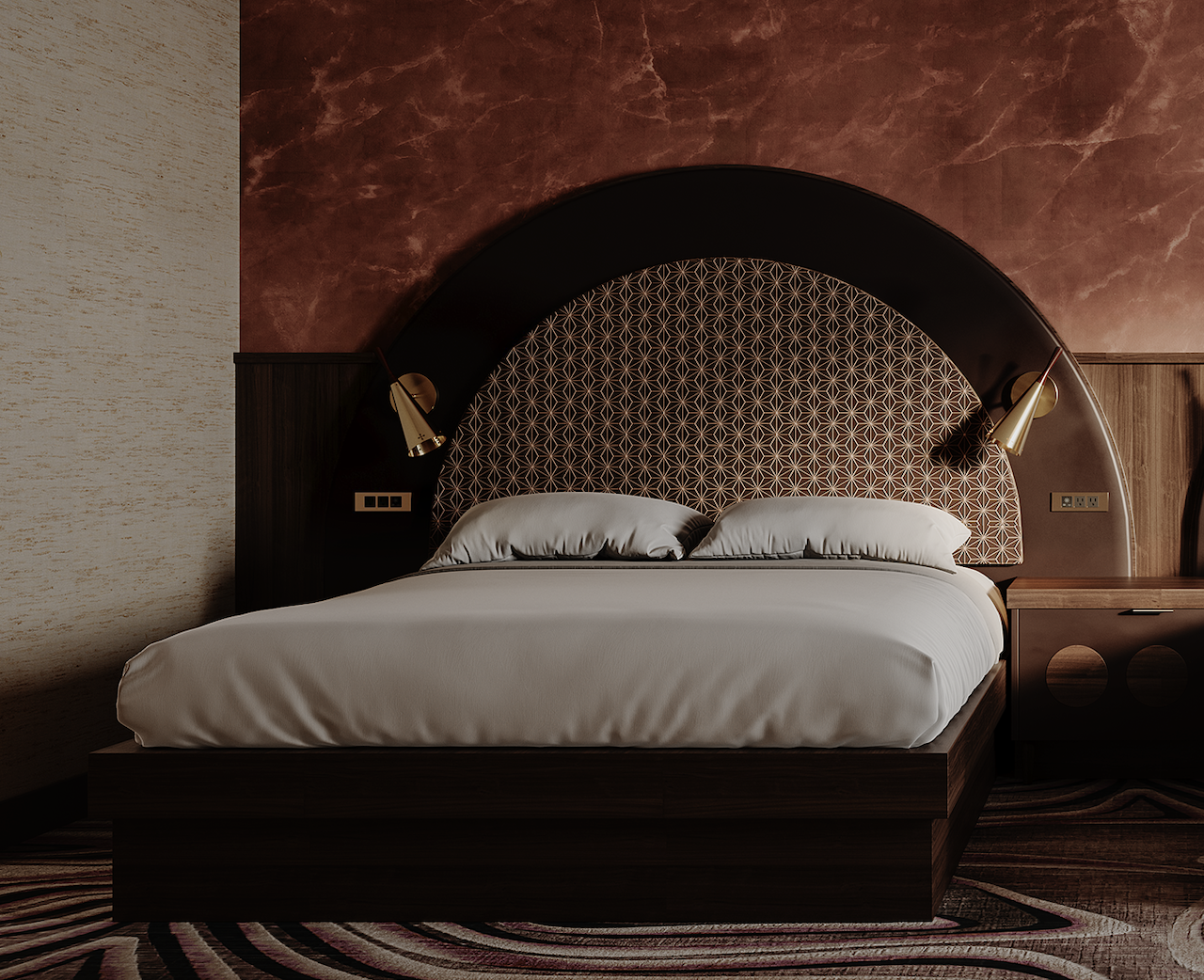
Hospitality has a specific commercial reality. The hotel cannot be photographed until it is finished and styled.
And it cannot sell rooms at scale until it can be seen. Renderings bridge that gap. They also carry a project through early marketing phases where there is genuinely nothing else to show (pre-sales marketing is one of the clearest use cases).
Online travel agencies have made the visual quality of a listing a direct performance factor. OTA platforms rank hotels algorithmically based on content quality, reviews, relevance, and conversion performance, making listing quality a critical driver of visibility and revenue (Hospitality.today, 2026).
The images on a listing page are not decoration. They influence whether the property appears in front of guests at all.
The stakes on that visibility have grown. SiteMinder reports that 26 percent of travellers now start their hotel research on platforms like Booking.com, surpassing Google and other search engines (21 percent) for the first time in industry history (SiteMinder, 2026).
Booking.com has become the entry point to hotel discovery for more travellers than any search engine. A listing that does not convert on visual quality is not just missing a conversion. It is missing the entry point.
Renderings also have to carry across surfaces. The same project appears on its own website, on OTA listings, in investor decks, on brand sheets, and in social media.
The images do not need to be different for each context. They need to be the right images, made with enough clarity and enough resolution that a single set can move through all of them.
This is often the part of a rendering commission developers underestimate. The brief is not one image for one purpose. It is a library of imagery that will serve the project through five years of use.
One question comes up often enough in hotel rendering conversations to address it directly.
On AI and hotel rendering
AI can generate a hotel image in seconds. It cannot read a section drawing, hold a brand standard, or keep a suite consistent across seven views.
Those are different problems, and rendering is still the one that solves them.
The technical distinction matters. Physical-based rendering engines calculate how light bounces through a space from calibrated material properties and lighting profiles.
The result is a render that represents a real building. AI image generation approximates what a hotel room tends to look like, based on patterns in its training data. AI rendering currently faces limitations in control, consistency, and predictability, making it more suitable for ideation than final presentations (Chaos Blog, 2025).
For a hotel that has not been built, the difference between representation and approximation is not cosmetic. It is the entire point of the image.
The precision gap also matters for architectural review. AI-generated renders often lack precision in dimensions or construction feasibility, and AI struggles to incorporate local building codes, zoning regulations, or cultural nuances (D5 Render, 2025).
The exact qualities that flag operators, planning authorities, and development teams are looking at are the qualities AI image generation handles least reliably.
There is an honest integration story worth naming. AI has a role in rendering workflows. Studios use it for mood exploration, reference generation, and specific post-production tasks where it genuinely helps (our studio's journey with AI covers this in more detail).
What AI has not done is make a finished hotel render dramatically cheaper. The work of modelling a hotel correctly, lighting it honestly, and keeping a guest room consistent across its lobby view, its corridor view, and its balcony view still takes time.
AI accelerates specific moments inside that work. It does not replace the work.
AI is a tool inside the process. It is not a shortcut around it.
How to choose a studio for a hotel project
Hospitality work is specific. A hotel project has more programmatic complexity than a multifamily residential tower.
Lobbies, guest rooms at multiple tiers, suites, amenity spaces, food and beverage, pool decks, back-of-house, operational zones. A studio that has worked on hotels understands how these spaces relate to each other, and what each one is doing in the guest journey.
Architect-trained teams read drawings differently. A hotel arrives with floor plans, elevations, sections, reflected ceiling plans, FF&E specifications, and, for flagged projects, a full set of brand standards.
Studios that read these documents as architects do will spend less time asking clarifying questions. And more time making the image correct the first time.
Time zone and communication rhythm matter on hospitality timelines, which are rarely relaxed. North American hotel projects often benefit from collaboration hours that align with the developer, the operator, and the design team.
This is a practical consideration, not a decorative one. A revision cycle that takes three days when it could take one is a meaningful cost on a project with a pre-booking window.
Portfolio evidence is worth looking at carefully. A polished residential portfolio is not the same as a polished hotel portfolio.
Lighting a hotel corridor, composing a restaurant at service, and staging a suite across a guest journey are each their own skills. The work a studio has actually delivered for hotels, rather than the work it has done in adjacent categories, is the most reliable signal.
At Eight Station, these are the considerations the studio has been built around. The team is made of artists trained as architects. The approach is considered, the collaboration direct.
The work is in-house, based in Vancouver, with hospitality projects across Canada, including Toronto, and the United States. Hotels and hospitality are a core part of what we do at Eight Station, and the studio's work has been published in Dwell, Archinect, Architizer, and other publications.
Frequently Asked Questions
What is hotel rendering used for?
Hotel rendering is used for brand and design review, city entitlement, investor presentations, and pre-construction marketing including OTA listings and the hotel's own website. A single set of renderings often supports all of these uses across a project's lifecycle.
How long does a hotel rendering project take?
Timelines vary with scope and complexity. A typical hospitality rendering package spans several weeks from kick-off through final delivery, with a kick-off, a first draft, two rounds of revisions on lower-resolution images, and final high-resolution delivery.
Rush options are available on many projects, though quality is generally better served by starting early.
What is the difference between hotel rendering and hospitality 3D rendering?
The terms are used interchangeably in the industry. Hospitality 3D rendering is a broader category that includes hotels, resorts, restaurants, and other guest-facing spaces.
Hotel rendering refers specifically to hotel and resort properties. Functionally, the craft is the same.
When should we start working with a rendering studio for a hotel?
Early. Renderings commissioned during design development feed brand review, entitlement, and pre-booking marketing.
Projects that wait until late in construction to commission imagery often compress timelines unnecessarily and limit how much the renderings can do.
What do we need to provide to get started?
For most hospitality projects: architectural drawings (plans, elevations, sections), FF&E specifications or a specification direction, a mood board or reference imagery, and, for flagged projects, the brand standards documentation. The more complete the input package, the fewer revisions the project requires.
Can AI-generated images replace hotel renderings?
Not for hospitality projects that will pass through brand review, design review, or marketing use at scale. AI is useful for early ideation.
It does not reliably produce the architectural precision, consistency across views, or brand compliance that hotel rendering requires.
Who owns the renderings after the project is completed?
Ownership and usage rights are defined in the studio agreement for each project. In most cases, usage rights are granted to the client on project completion, with the imagery remaining the studio's property until final payment.
Key Takeaways
- Hotel rendering is a project document, a design review artefact, and a commercial asset. The same images often serve multiple audiences across the project lifecycle.
- Brand and flag operator design reviews treat renderings as required submittals. Marriott's own design standards explicitly call for professionally created perspectives as part of the interior design submission (Marriott Design Standards, 2020).
- The global hotel construction pipeline reached a record 15,922 projects at the end of Q4 2025, with continued opening forecasts for 2026 and 2027 (Lodging Magazine, 2026).
- AI has a role in rendering workflows. It has not replaced the architectural precision, consistency across views, or brand compliance that hotel rendering requires.
To see more of the studio's hospitality work, visit our project index. To discuss a hotel project, get in touch.