
Types of Product Rendering: Which Style Fits Your Needs?
When evaluating product visualization options, businesses face a critical question: which rendering approach will best serve their goals? The decision between white background isolation, lifestyle context, or motion-based animation affects everything from conversion rates to brand perception.
The global 3D rendering market is projected to grow from $5.37 billion in 2025 to $26.65 billion by 2034, driven by rising demand for photorealistic visualization across industries (Precedence Research, 2025). Visual quality now ranks as the most critical purchase factor for 67% of consumers—higher than product descriptions, specifications, or reviews (Pixelz, 2025).
Understanding the main types of product rendering helps businesses make strategic visualization decisions. This guide examines still image approaches, motion-based visualization, decision frameworks for matching rendering types to goals, and quality factors that elevate any approach.
Understanding Product Rendering Categories
Product rendering divides into two broad categories: still images and motion-based visualization. Each serves different stages of the customer journey and supports distinct business objectives.
Still image rendering creates static photographs from 3D models, showcasing products on neutral backgrounds or in styled environments. This approach dominates e-commerce product pages, catalogs, and marketing materials where customers need clear visual information.
Motion-based rendering brings products to life through animation and interactivity, including cinematic sequences, 360-degree rotations, and interactive viewers. Motion rendering excels at demonstrating functionality and creating engaging social media content.
How Rendering Choices Impact Business Outcomes
Visualization decisions directly affect measurable business metrics. Merchants using 3D models experienced a 94% higher conversion rate compared to those using standard photography alone (Shopify, 2024). Adding multiple product views through slideshow features increases conversion rates by 65% (Pixelz, 2019).
Return rate reductions represent another critical benefit. Businesses implementing quality product visualization experience return rate reductions up to 40% (Shopify, 2024). Over 25% of returns happen when products don't match online representation (Offshore Clipping, 2025).
Brand perception effects emerge from execution quality. High-quality visualization signals attention to detail, building trust before purchase. Photorealistic rendering reduces purchase anxiety by up to 58% (Welpix, 2025).
Still Image Rendering Types
Still image rendering forms the foundation of most product visualization strategies. Understanding the two main approaches helps businesses allocate resources strategically.
White Background (Silo) Rendering
White background rendering isolates products against pure white or neutral backdrops, eliminating environmental distractions. This approach creates clean, professional imagery ideal for technical documentation and comparison shopping.
Key characteristics:
- Pure focus on product form, materials, and craftsmanship
- Maintains consistent presentation across product catalogs
- Enables accurate color representation for brand consistency
- Supports zoom functionality for detail inspection
Business applications:
- E-commerce product pages requiring clear representation
- Online marketplaces with standardized image requirements
- Product comparison scenarios
- Technical specification sheets and documentation
This approach particularly suits products where form and finish drive purchase decisions. For lighting design, gallery-style presentation elevates white background rendering. Our work with the Ionie & Arcades collection demonstrated how minimalist settings inspired by ancient Greece created an elegant backdrop that honored sculptural qualities while maintaining product focus.
Lifestyle (Contextual) Rendering
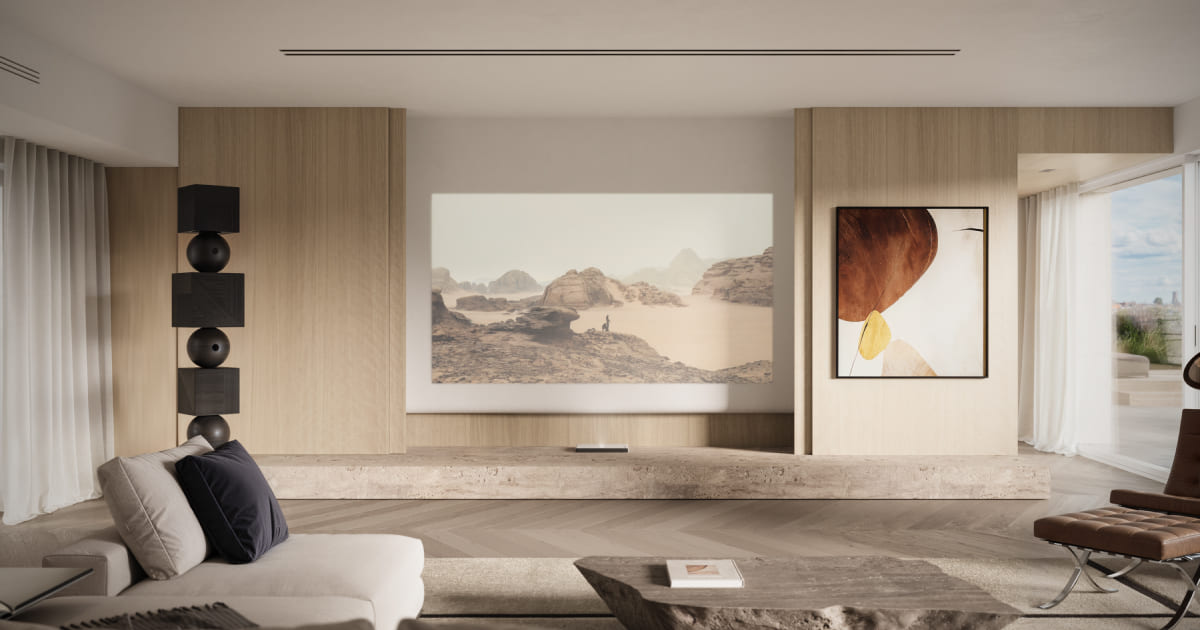
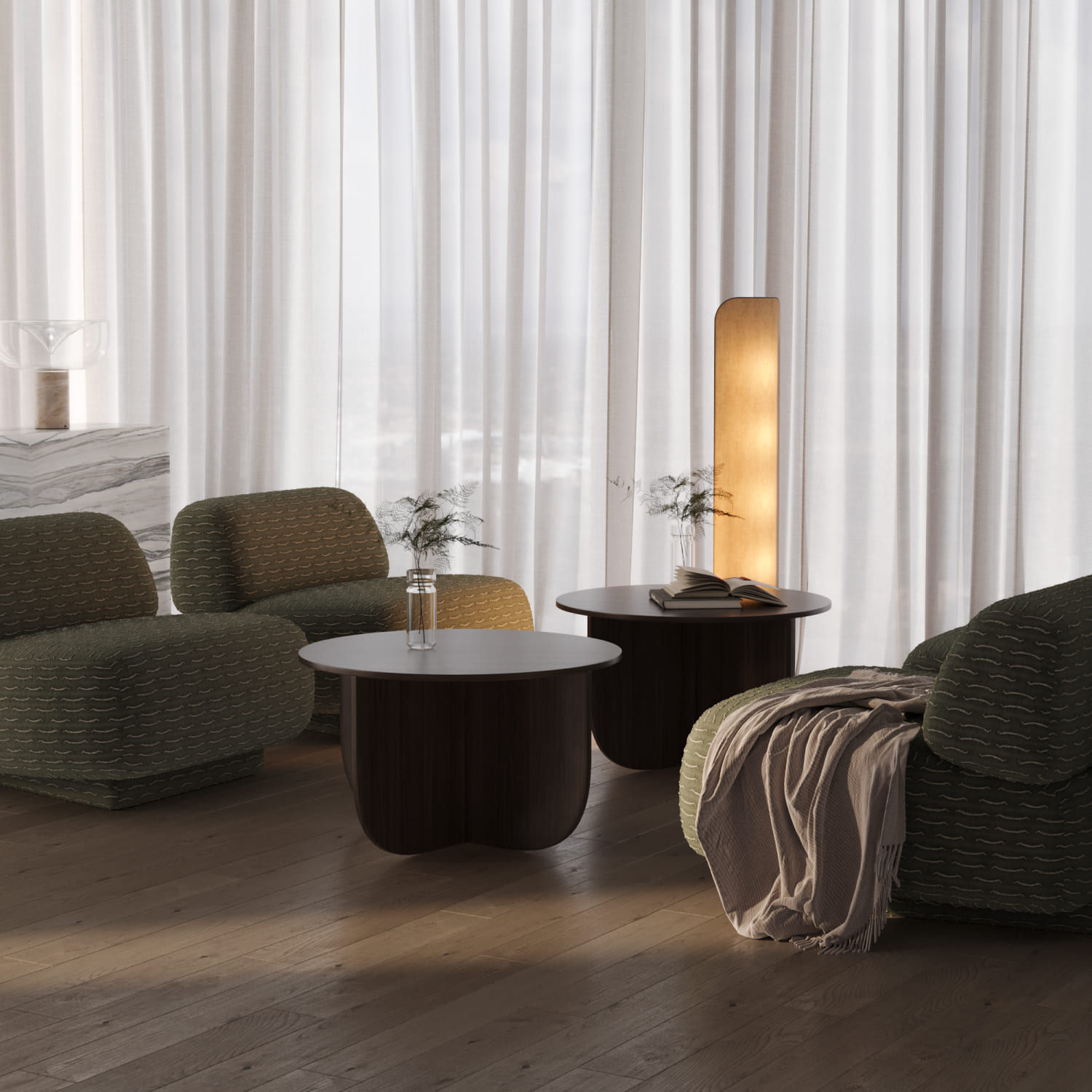
Lifestyle rendering places products in realistic, styled environments that help customers visualize real-world applications. This contextual approach transforms product presentation into storytelling opportunities.
Research shows 90% of shoppers mention photos as extremely important or very important when deciding to purchase (Etsy, 2024). Contextual imagery satisfies this need for visualization while creating emotional resonance.
Key characteristics:
- Shows products in real-world environments and use scenarios
- Helps customers understand scale, proportion, and spatial relationships
- Creates emotional connection through aspirational styling
- Communicates brand values through environment selection
Business applications:
- Marketing campaigns and brand storytelling initiatives
- Website hero images and landing pages
- Social media content building emotional engagement
- Product launches requiring market positioning clarity
When Eight Station created visualization for the Green Theory outdoor furniture collection, lifestyle context proved essential. Rendering 250+ customizable products required maintaining consistency across materials and colorways while demonstrating how pieces function in outdoor environments. The modern aesthetic emphasized realism and tactility.
What Makes Still Rendering Effective
Beyond choosing between white background and lifestyle approaches, execution quality determines impact. Photorealism in visualization requires attention to lighting, materials, and composition.
Lighting considerations:
Natural lighting creates authenticity and warmth. The interplay between light and surface reveals material character. Shadow and highlight balance creates depth perception that helps customers understand three-dimensional form.
Material accuracy:
Texture mapping precision ensures fabrics, wood grains, and metal finishes appear authentic under magnification. Surface behavior under lighting must match real-world physics—matte materials absorb light differently than glossy surfaces.
Our work on the Pagaie sculptural lighting piece required intense focus on material accuracy. Terracotta tones and plaster textures needed to complement the lamp's silhouette while accurately representing light diffusion. Reflection depth and surface response created tactile, true-to-life imagery.
Composition principles:
Camera angles determine which features customers notice first. Three-quarter views typically reveal more information than straight-on shots. Composition balances product prominence with environmental context that enhances rather than overwhelms.
Motion & Interactive Rendering
Motion-based visualization addresses specific business needs that static imagery cannot satisfy. Animation brings products to life, demonstrating functionality and creating engagement opportunities.
Product Animation
Product animation creates cinematic sequences showing products from multiple angles, in motion, or demonstrating features. This dynamic approach excels at explanation and engagement.
Key characteristics:
- Shows products from multiple viewpoints in fluid sequences
- Demonstrates movement, assembly, or functionality
- Creates highly shareable social media content
- Explains complex products through motion rather than text
Business applications:
- Feature demonstration videos explaining functionality
- Assembly or installation guides reducing support needs
- Social media marketing content
- Product launch campaigns requiring immediate impact
Research comparing video and 3D visualization found that while adding video improves conversion by 60%, adding interactive 3D improves conversions by 94% (Shopify, 2024). The difference lies in user control and exploration capability.
Animation styles serve different objectives: 360-degree turntable rotations provide comprehensive views, feature-focused sequences highlight details, exploded views demonstrate construction, and lifestyle animation combines contextual rendering with motion engagement.
Eight Station's 3D animation services focus on cinematic animations emphasizing light, material, and color interplay alongside carefully timed transitions.
Interactive Rendering Considerations
Interactive rendering enables real-time manipulation, giving customers control over exploration. More than 80% of people choose to interact with 3D content when given the option (Sayduck, 2022).
Interactive approaches:
360-degree product viewers allow rotation, examining items from all angles. Zoom capabilities let customers inspect craftsmanship and material quality. Color and material variation displays enable preview of different finishes.
When interactivity adds value:
Products with multiple configuration options benefit from interactive exploration. Items where scale perception proves critical need interactive context. High-consideration purchases justify sophisticated interactive experiences.
Interactive content significantly increases engagement, with product pages featuring these capabilities seeing 4.5 times longer dwell times (IPSOS, 2024).
Advanced interactive features like augmented reality, real-time configurators, and virtual reality extend beyond traditional product rendering into specialized technology implementation.
Choosing the Right Rendering Type for Your Project
Understanding rendering types provides foundation, but selecting optimal approaches requires strategic thinking. The benefits of 3D visualization extend across conversion, returns, and brand perception when matched to business goals.
Match Rendering to Business Goals
Goal: Maximize Conversion on Product Pages
Average e-commerce conversion rates range from 1.65% to 2.9%, with top performers achieving 6.4% (Varos, 2024). Strategic visualization significantly influences performance.
Priorities include white background imagery providing clear representation, multiple angle views building confidence, detail shots enabling inspection, and optimized file sizes ensuring fast loading.
Goal: Build Brand Identity & Emotional Connection
When differentiation matters more than immediate conversion, lifestyle rendering creates emotional resonance. The DFS case study demonstrates this power—implementing immersive visualization of 10,000+ products achieved 112% conversion increase and 106% revenue per visit jump, delivering 22-fold ROI (iEnhance, 2024).
Goal: Demonstrate Product Functionality
When products require explanation, animation clarifies what still images cannot communicate. The Audi configurator pilot found real-time 3D increased engagement by 66% while showing 9% increase in additional feature selection, increasing purchase price and revenue (Threekit, 2025).
Product Category Considerations
Furniture & Home Goods
Furniture visualization faces unique challenges around scale perception and material representation. Lifestyle context proves critical for spatial understanding, material accuracy enables confident specification, and multiple angles support dimensional comprehension.
Furniture brands embedding interactive 3D views report conversion uplifts reaching 94%, while return rates decrease when shoppers visualize scale and finish in context (Mordor Intelligence, 2025).
Lighting & Decorative Products
Lighting products must look compelling when off while conveying illumination performance. This demands rendering showing both object beauty and lighting behavior. The art of 3D product design proves particularly relevant for lighting visualization.
Our Ionie & Arcades project demonstrated these priorities through gallery-style presentation using pedestals, arched openings, and muted palettes. Gentle daylight enhanced tactile materials and subtle movement suggestions.
Consumer Products & Small Goods
Smaller consumer products often succeed with simpler approaches. White background provides clarity, detail shots highlight craftsmanship, and color accuracy maintains brand consistency. For consumer products, rendering efficiency matters alongside quality.
Combining Rendering Types Strategically
The most sophisticated visualization strategies deploy different approaches across the customer journey. White background provides foundation for product pages, lifestyle adds emotional dimension for marketing, and animation delivers engagement for social media.
Strategic deployment:
E-commerce product pages benefit from white background plus zoom and multiple angles. Marketing landing pages showcase lifestyle rendering establishing brand context. Social media leverages animation for engagement. Product launches deploy comprehensive suites including all approaches.
Budget allocation:
Hero products warrant full rendering suites. Core products receive white background foundations. Lifestyle adds selectively for differentiation. Animation scales to highest-impact products where demonstration provides clear value.
Quality Factors That Elevate Any Rendering Type
Execution quality ultimately determines business impact. Technical excellence and artistic sensibility separate adequate visualization from compelling imagery.
Technical Excellence Foundations
Resolution and detail: High-resolution output enables zoom functionality. Texture detail conveys material quality. Sharp edges communicate precision. Accurate proportions maintain trust.
Lighting mastery: Realistic light behaviour creates depth. Appropriate contrast ensures clarity. Highlight and shadow balance guides attention. Light source consistency maintains realism.
Material authenticity: Surface response must match physical behaviour. Texture mapping reflects real materials. Reflection and refraction accuracy matters for glass and metal. Tactile quality enables remote material judgment.
Atmospheric Realism vs. Pure Technical Accuracy
Technical excellence provides foundation, but exceptional rendering transcends pixel-perfect accuracy. How spaces feel matters as much as how they look. Lighting mood and compositional choices create emotional context.
The Eight Station approach:
Architectural training informs spatial understanding. Art direction ensures cohesive visual storytelling. Focus on atmosphere alongside technical excellence creates engagement. Translating design intent into visual narrative serves communication objectives.
This philosophy reflects positioning of understated elegance and quiet grandeur. Rather than flashy approaches, emphasis falls on refined execution allowing product quality to speak naturally.
The Green Theory, Ionie & Arcades, and Pagaie projects demonstrate attention to both technical excellence and atmospheric authenticity.
Frequently Asked Questions
What is the difference between white background and lifestyle rendering?
White background isolates products on neutral backdrops, focusing attention on form and features. Lifestyle rendering places products in styled environments providing context. White background works best for comparison and technical documentation. Lifestyle excels at brand storytelling and emotional engagement. Many businesses use both strategically across touchpoints.
How do I know which rendering type my business needs?
Start with your primary objective. If conversion optimization drives strategy, prioritize white background with multiple angles. If brand differentiation matters most, invest in lifestyle rendering. If explaining functionality proves critical, animation clarifies what still images cannot. The strategic approach combines types across the customer journey.
What makes product rendering look realistic?
Realism emerges from lighting mastery, material accuracy, and compositional skill. Lighting must mimic natural behavior with appropriate shadows and highlights. Materials should respond to lighting exactly as physical counterparts would. Beyond technical accuracy, atmospheric realism through mood and subtle details creates authentic imagery.
Is animation better than still images for products?
Animation and still images serve different purposes rather than competing. Still images provide clear documentation supporting comparison. Animation demonstrates functionality and creates engagement. Interactive 3D improves conversion by 94% versus 60% for video (Shopify, 2024), but doesn't replace still imagery. Effective strategies combine both approaches.
Conclusion
Selecting rendering types strategically requires understanding both business objectives and how different visualization approaches support those goals. White background provides clarity for conversion-focused pages, lifestyle creates emotional connection for brand building, and animation demonstrates functionality.
The most successful visualization strategies recognize that rendering type selection represents one decision within broader strategic thinking. Execution quality, consistent art direction, and deployment across appropriate touchpoints matter as much as choosing between approaches.
Quality product rendering translates design intent into visual narratives helping customers make confident decisions. Whether you need white background clarity, lifestyle storytelling, or motion-based demonstration, rendering should serve your products, brand, and customers.
Explore Eight Station's portfolio of product visualization work to see how different rendering approaches serve diverse product categories and business objectives.